


I finished shooting my last string of the last match of the GSSF indoor league and retracted my paper “tombstone” style target. There were holes all over the paper. Dejectedly, I removed the shot up target from the hangers and handed it to the scorer. I watched as he struggled to do the math to add up my dismal score. Usually there aren’t so many holes out of the 10 ring to score. The indoor Glock Shooting Sports Foundation shoots are considered fairly easy as “bullseye” style matches go. The cool kids are members of the 500 club meaning they didn’t miss a single shot throughout the event. I was struggling to make the 470 club. Despite having been high senior in a prior league, it seems shooting paper just isn’t my thing.

Granted, I had developed a huge flinch that wasn’t helping my scores, but despite that, I found I didn’t get very excited when league day rolled around and I was off to shoot at some paper. Perhaps I was a bit jaded after my first official pistol match involved reactive steel targets. Somehow, holes in a piece of paper just don’t offer the same satisfaction as the audible ping of a bullet hitting steel.
I had leaped into the world of steel targets in the spring of 2022 at the PSA Shootout. Since then, I have the itch to shoot steel when the opportunity presents itself. Such opportunities are few and far between in the middle of winter in Pennsylvania but there is a club called Pricetown Rifle and Pistol Club that offers the opportunity to scratch the steel itch 12 months of the year. The events they hold are sanctioned by the Steel Challenge Shooting Association. Rather than falling steel, SCSA events involve series of steel targets the shooter shoots as fast as possible.
I’d known about Steel Challenge for years, but had never shot an official event. I dabbled a bit with a local league that was a similar format but, with my deer season at an end, and a long, cold winter ahead I found the Pricetown events and decided to attend the post-Christmas shoot. So, despite the rain and fog, I set off yesterday for Fleetwood, PA to punish some steel plates.
One aspect of the SCSA events I never cared for is that center fire pistols are holstered and hands held above your shoulders. The idea is to shoot from a holstered “surrender” position. This is common across many of the shooting sports. I think it has more to do with a fair starting position for everyone rather than the idea you are going to become Clint Eastwood. It is unrealistic to think you can draw your weapon against and opponent who is already pointing a gun at you, and quickly mow down several assailants before neatly dropping your pistol back in its holster and taking a puff on your cigar. From a concealed weapon/self-defense perspective, it is actually a really bad idea to try to draw your gun against “the drop”. Further, the belts, holsters, and guns typically used in Steel Challenge are nothing like most would use for concealed carry. It is actually against the rules to shoot Steel Challenge from concealment. As such, special belts, holsters, and guns have evolved to help those that are fast already get even faster.

Anyway, that’s a lot of words to say I decided to shoot one of my rimfire pistols. These pistols shoot the same .22lr rounds that were many people’s first experience with a firearm. .22lr ammunition is cheap, there isn’t any recoil, and for the purposes of steel challenge, aren’t shot from a holster, but rather the “low ready” position. But as always, I’m getting ahead of things a bit.

My first surprise of the day was a pleasant one. I had registered ahead of time through a system called Practiscore that is used by clubs for such purposes. It is also a central databank for scores, etc. It is a one stop shop for recreational shooters. After arriving at the club, I gave my name and handed over the $20 shooting fee. I casually mentioned this was my first Steel Challenge match and promptly had my $20 returned. Evidently, your first match is free. Who knew?
The SCSA has 8 prescribed stages. For any given event, clubs choose 6 of them. Each stage (along with everything else) is described in the SCSA rule book. I was assigned to squad 3 and would start on the third stage which was called “Showdown”. To understand the picture and the stage, a brief explanation of Steel Challenge is required. The best explanation for the beginner can be found here but I’ll summarize the important parts because you’ve probably already wasted more of your day than necessary reading my nonsensical babbling. Essentially, the shooter stands in the shooter’s box (in this case there are two) and, upon orders from the range officers, fires at each steel plate shooting the Stop plate last. This is done as fast as possible with the goal of hitting each plate once. The shooter can shoot the plates in whatever order they want except the Stop plate is always last. If the shooter inadvertently hits the Stop place before shooting all the other plates, shooting stops and any unshot plates are scored as misses. (More on this later.) Each stage is shot 5 times with the participant’s worst time being discarded. Times are then tallied through the day for the final score. On each stage, time penalties can be assessed for misses, or procedural errors. Egregious procedural errors that compromise safety result in automatic disqualification from the event.

HEY! WAKE UP! I’m done prattling on about the rules. Well almost anyway. The one variation with Showdown as can be seen in the diagram is that there are two shooter boxes. The participant shoots 2 strings from one box and then moves to the other for 3 more. It is the shooter’s choice which box they start in and which they shoot more strings from.
It was a raw, rainy, foggy morning so turnout was a bit light and our squad was small. I seriously considered skipping the whole thing but the forecast showed breaks in the rain and I own a few hundred dollars worth of expensive, waterproof hunting clothing. The alternative was probably sitting home and writing some boring blog post so I couldn’t blame those that decided not to show. We only had 7 people on our squad with a couple of them shooting more than one division meaning they would shoot more than once per stage but with different guns.
I had chosen to shoot my Smith and Wesson Victory. The Victory is one of Smith and Wesson’s current .22lr target offerings. It is a 10 shot, semi-automatic pistol. I have a Burris Fastfire III red dot style sight mounted on it. For purposes of SCSA, the division is “Rimfire Pistol Open” or RFPO for short.

Ammunition-wise I had chosen CCI mini-mags. Typically I just use good quality standard velocity stuff but, unlike centerfire pistol ammunition, rimfire can be a little finicky in cold, damp weather. CCI mini-mags run a bit hotter. Semi-automatic pistols harness some of the energy from the fired shot to work the action and load the next round so having robust ignition is important. l I also decided to keep my loaded magazines in my coat pocket with a hand warmer. This turned out to be a successful strategy as everyone else on the squad shooting any sort of rimfire suffered malfunctions throughout the day. I didn’t experience a single issue. At least not with ammunition.
I have a bad history with getting nervous at official events. Happily, I wasn’t the least bit nervous when I stepped to the line for Showdown. I was third in the order and had already watched Jason and John work through their strings.
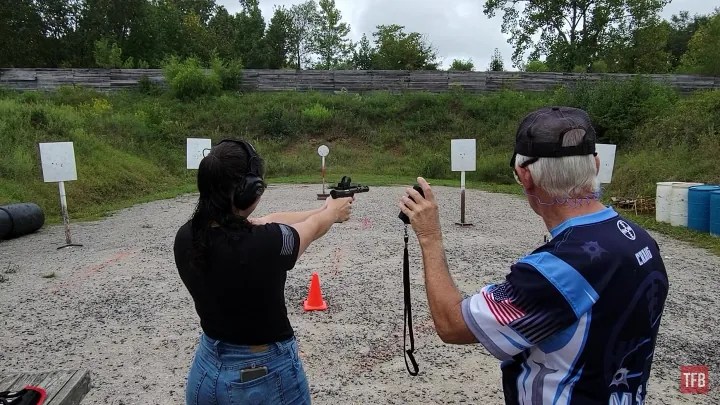
I don’t know what others do here, or what is considered best practice, but for me, I’ve found it best to keep my sight dot in the red dot centered as though I’m aiming for the cone and keep my first target in my peripheral vision (if possible). Especially with my Victory, the sight sits quite high above the bore and it is easy to waste time trying to find the dot if I focus on the first target instead of the dot.
“Shooter ready?” I nodded. “Standby.” BEEP!
I raised the pistol, centered the dot on the big plate to the far left and pressed the trigger. Nothing. I had forgotten to take the manual safety off. “Shooter not ready I guess.” The gun world is made for right handers so I had to reach over the gun to click the safety off. I re-aimed and pressed again this time with the desired POP and PING! A tiny .22lr splatter appeared in the middle of the plate and I quickly moved to the next plate. I’ll probably never be the fastest shooter at one of these events. (Especially if I leave the safety on.) I don’t know that I’ll ever try to be. My goal is to shoot accurately and quickly. To be really fast at such events you have to learn to trust your shot and move on ASAP. But it is really easy to go too fast and develop really terrible habits. Anyway, due to the shooter malfunction of leaving the safety on, the first string was my slowest at 7.14 seconds. The fastest shooters would go through the target sequence 2.5x in the amount of time. But my strings got better after that.
- 7.14
- 4.20
- 3.81
- 5.50
- 4.23
Not super fast and not awful. I felt really good about how I shot. Granted, this is not precision shooting by any means but it still feels good to execute good shots. I retreated to the table where our gear was, reloaded my magazines, and returned them to my coat pocket.

There isn’t huge staff to run these events so the squad members do the work. It isn’t a lot of work. The bluetooth timers “listen” for and record the shots and are connected to a tablet. Each string is transferred from the timer by the range officer and verified by someone running the tablet. As each shooter finishes their 5 strings and the range officer gives the “range is clear” command squad members take special paint down range and touch up the hits on the targets so they are clean for the next shooter.
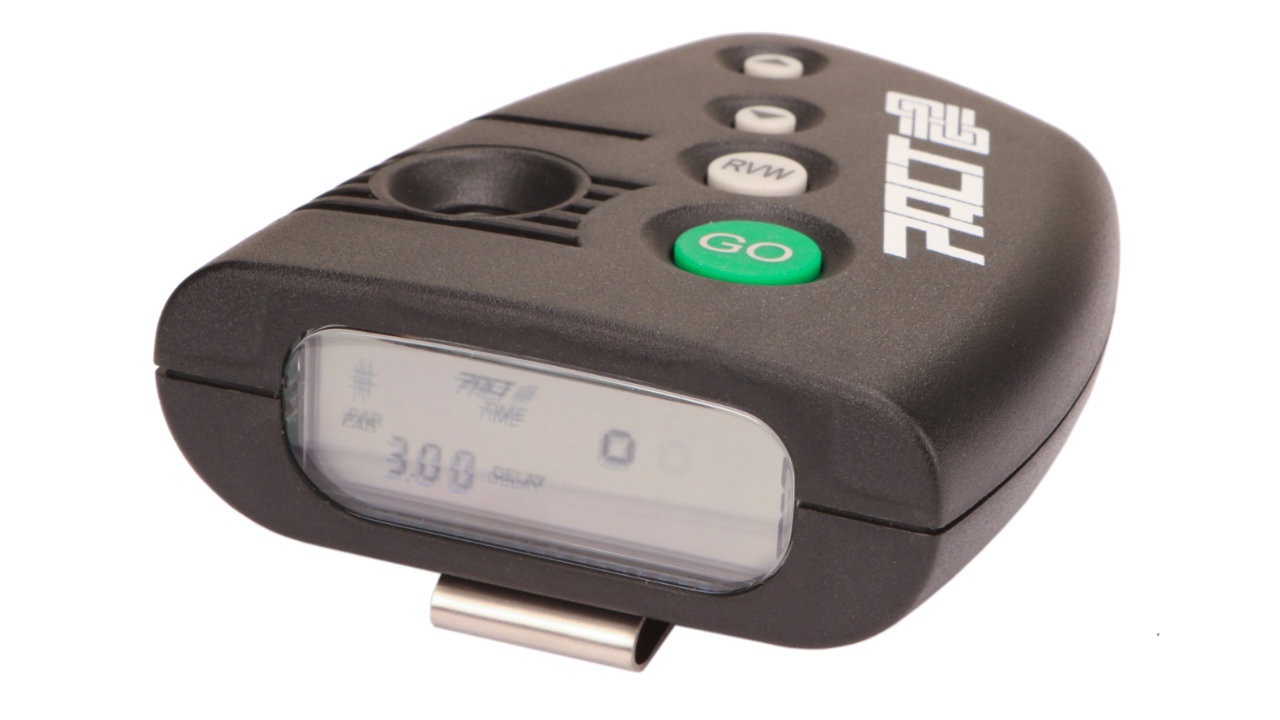
Helping out with scoring is a good way to learn your squad mates names and to watch the technique of other, more experienced shooters. I never mind helping out with these tasks but since I was shooting for free I made it a point to do as much as I could.
Once we wrapped up “Showdown”, we moved on to stage 4 which, in this case, was “The Pendulum”. No idea how it got its name but that’s what it is called.
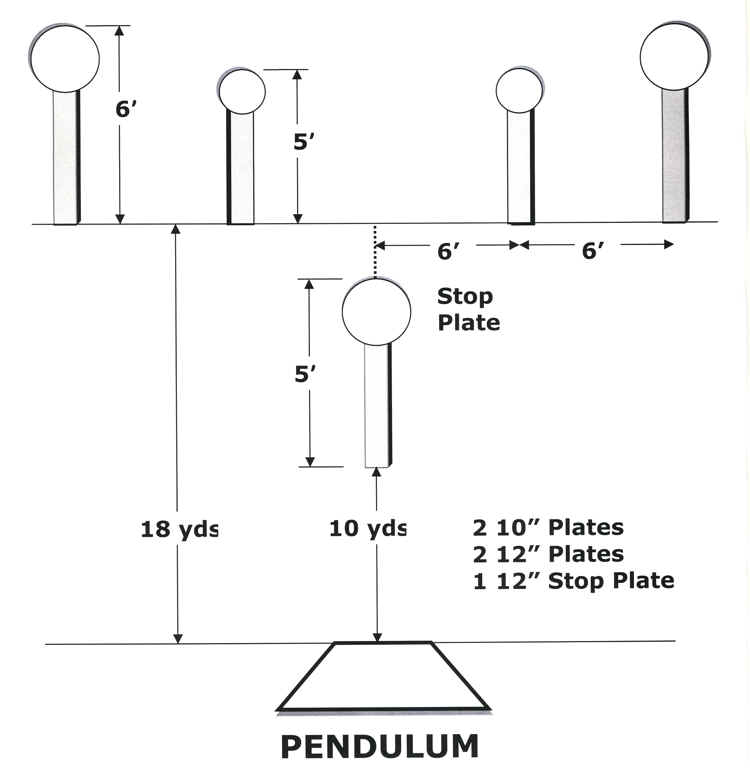
With slightly smaller targets at a great distance, Pendulum requires a bit more care in shooting. It turns out it is easy to miss. I learned two valuable lessons on this stage. First, if you aren’t sure if you hit a target or not, it is faster to just shoot again than to take the 3 second penalty for a miss. Second, if shooting a gun with only a 10 round magazine be sure to insert a fresh magazine for each string. On string 3, I was told I missed the second from the right. It is noteworthy that when shooting .22lr at these plates, it is sometimes hard to tell if you hit or not especially if there is a lot of shooting on the other stages at the same time. You don’t necessarily hear the “PING” and the little 40 grain .22 rounds don’t necessarily make a big splatter or move the steel plate.

At the end of string 4, I was loading my next magazine which should have been my last but saw another sitting on the table. Confused, I thought I must have set 6 out. I knew I had a spare “just in case” but it was in my other pocket. Anyway, I proceeded to shoot my last string of the stage. Aside from the miss, it was decent overall.
- 6.43
- 6.29
- 5.70 (+3 seconds)
- 5.43
- 5.11
This is the way it should happen with descending times as you get better at the stage. I picked up my magazines and made my way to reload them. One magazine was completely empty. Unless I shot really terribly all should have had some rounds in them. It suddenly occurred to me I hadn’t reloaded for one string. That meant, I had had two strings where I didn’t miss at all. This was actually pretty common for me for the day. I focused on accuracy rather than speed. Still, had I been aware I had to shoot perfectly for that string with only 5 rounds I’m sure I wouldn’t have. Ignorance is bliss!
Our next stage was “Accelerator”. If I had one stage that I inexplicably and totally FUBAR’d . . it was Accelerator. There was nothing especially difficult about the stage except that the nut at the back of the grip got a little loose.
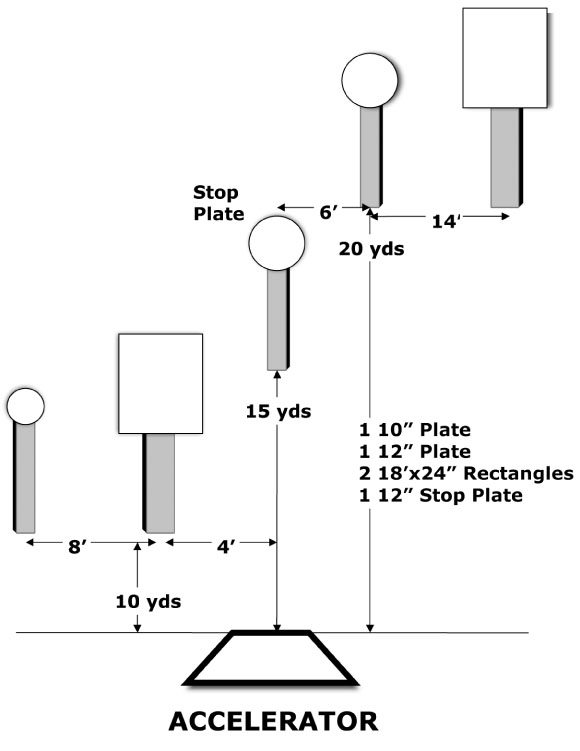
For some reason, I struggled with that big, giant rectangle at 10 yards. I didn’t struggle to hit it. I struggled to shoot at it. Even when we walked up to the stage I thought “Don’t shoot the stop plate early.” My brain said the smart way to shoot this stage was just to go left to right skipping past the Stop plate until the end. But for a reason only the Gremlin in my brain knows, I had a giant mental block with that big target. The first string was almost predictable.
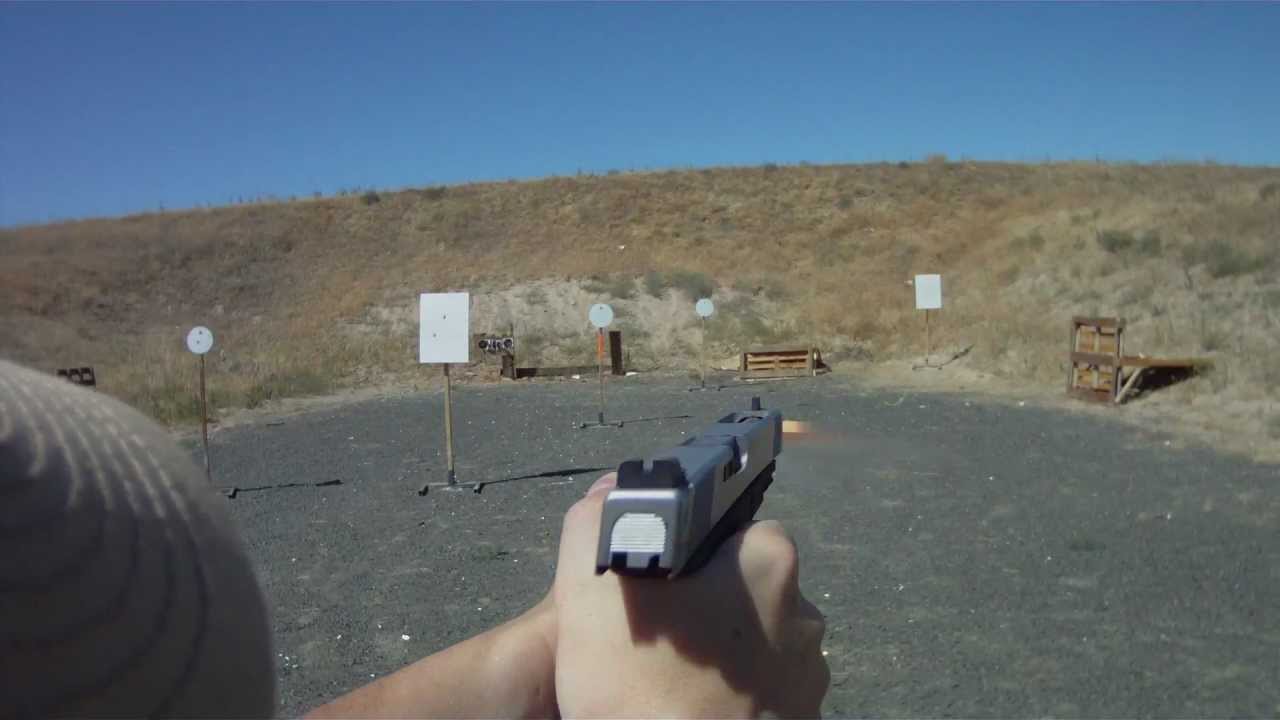
“Shooter Ready?” “Standby.” BEEP! 10″ plate . . . POP . . . PING! I swing right . . right past the big rectangle. “Oh crap! I was supposed to shoot that!” I saw a red dot on white steel. POP! PING! Shit. That was the stop plate. 9 seconds of “miss” penalties ensued. My second string went better and then I managed to swing by the rectangle again. Completely flustered, I shot some crazy order, missing at least once but at least I didn’t shoot the stop plate early though the final time for the string wasn’t a lot different. On my 4th string, I really beared down and shot better. I managed a miss on an otherwise good 5th string. Adam, one of the other guys on my squad, said he likes to shoot the big target first. I think next time I will try that.
- 2.55 (+9 for 3 misses)
- 5.01
- 9.53
- 4.91
- 4.6 (+3)
Ugh. I’m not really sure how it is possible to mess up one stage that badly. Moving on. Our next stage was an ego-stroker called “Smoke and Hope”.

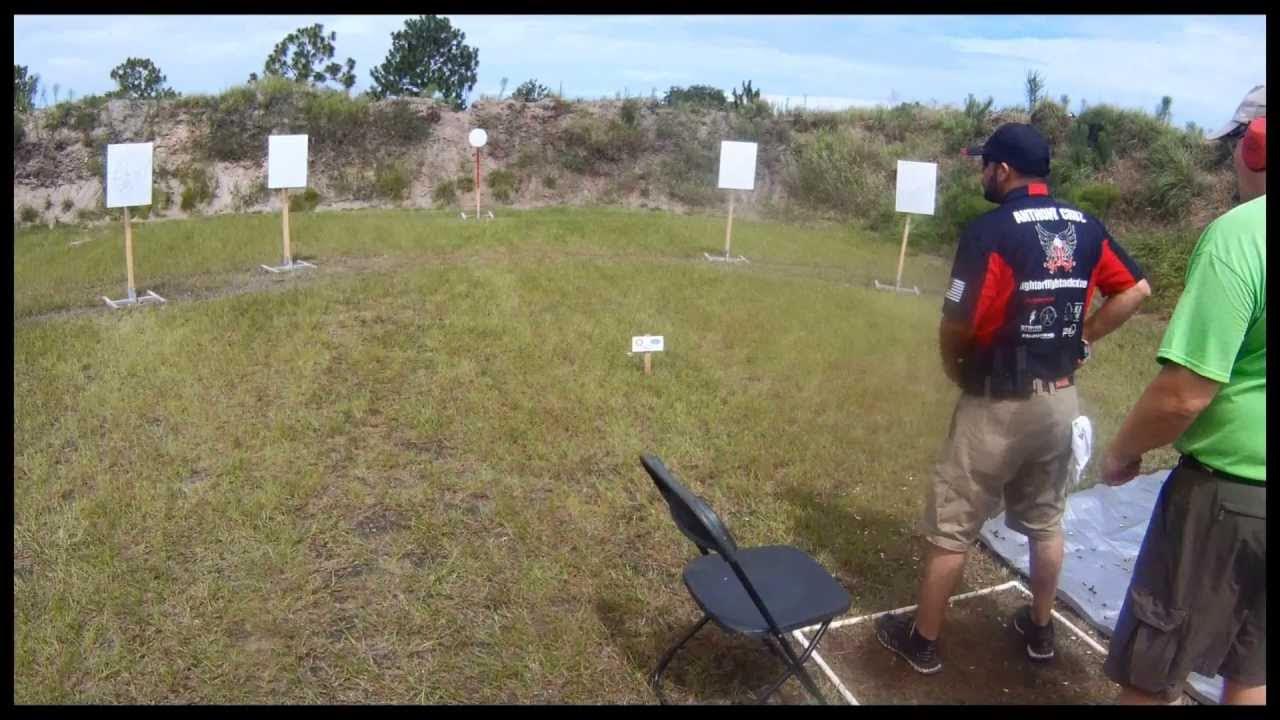
Smoke and Hope involves 4 impossible-to-miss 18″x24″ rectangles at a mere 7-9 yards. The most difficult shot here is the Stop plate. After goofing up Accelerator, I was ready to redeem myself. Just to rebuild confidence after Accelerator, I took my time on the first string. But those giant rectangles filled the view on my red dot. After that, I centered the dot, slammed the trigger and moved on. I did force myself to take my time a bit on the Stop plate. After those big targets, it would have been easy to waste time taking a couple shots there. I think I only had to shoot a second shot at it once on string 4. Otherwise my times for Smoke and Hope descended throughout.
- 4.23
- 3.92
- 3.57
- 3.82
- 3.35
After stage 6, we took the long walk back to stage 1 where we found the “Speed Option”. In and of itself it was not an intimidating stage though the Stop plate sits way out there at 35 yards. Until you shoot it the first time that seems like a poke. It turns out the hardest thing about it is knowing for sure you hit it or not with a .22lr. Both the ping of steel and the visual hit are hard to identify especially if you are shooting. I don’t know what the SCSA rules say as far as the RO or scorer “helping” but we were letting the shooter know when they got the Stop plate. It was much easier to tell with those shooting center fire cartridges with more power.

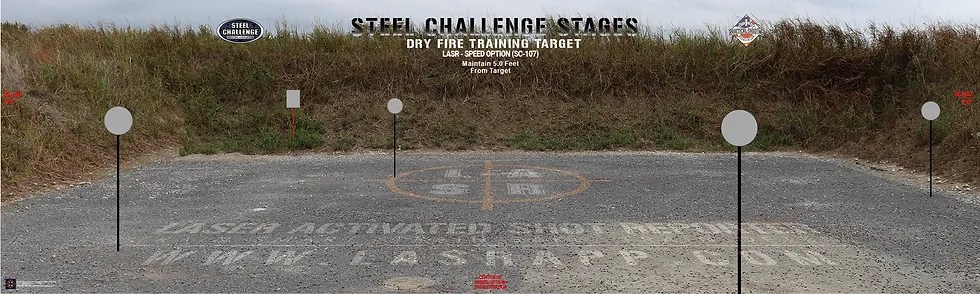
The common method for shooting Speed Option is to work left to right than just come back for the far Stop plate. I chose a different method. I started with the far left and then worked my way near to far. I felt like mentally this would work me toward the longer Stop plate. I don’t know if it was fast or not. Perhaps next time I’l try shooting it differently but I was shooting well by this point and didn’t have any difficulty with any of the plates. In general that middle plate at 20 yards gave people the most most fits.
- 5.47
- 5.06
- 4.62
- 4.67
- 6.24
Having 4 good strings in the bank, I decided to try to race on the last and it didn’t go great so that was the toss out
Lastly we moved on to “Roundabout”.
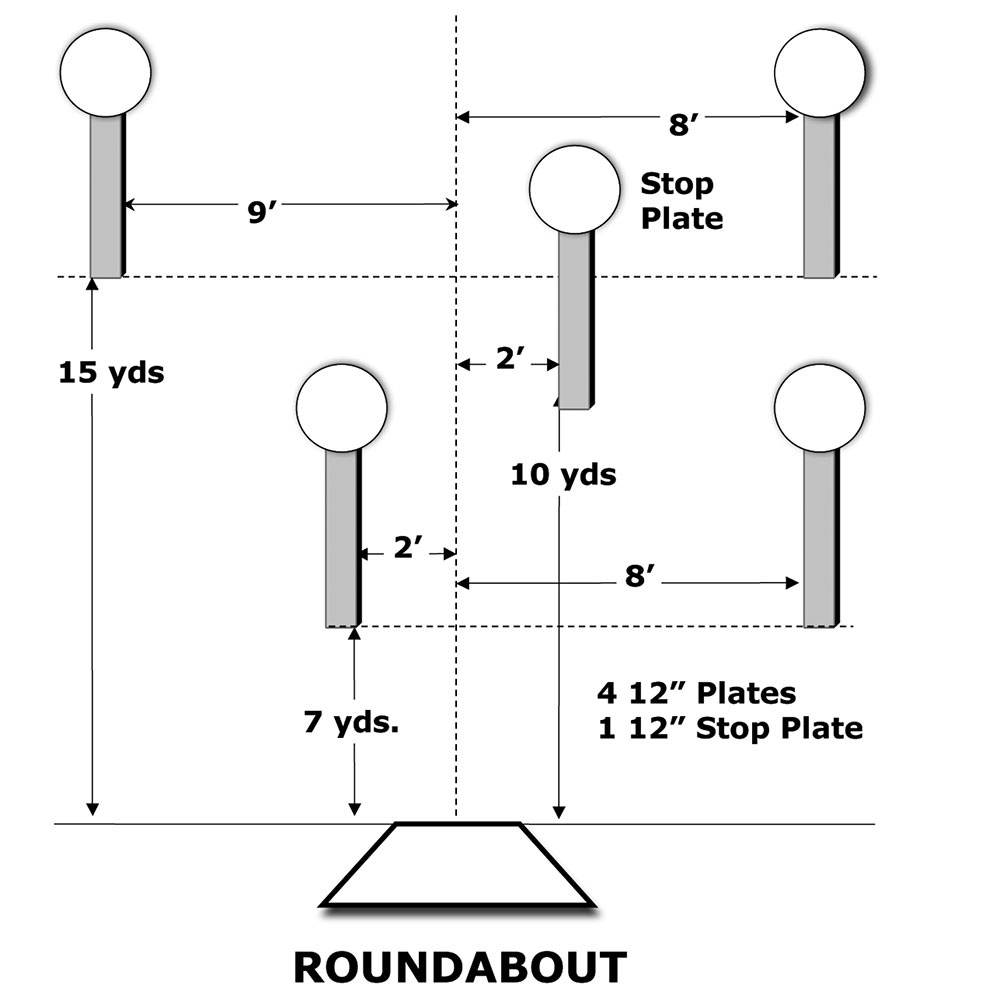
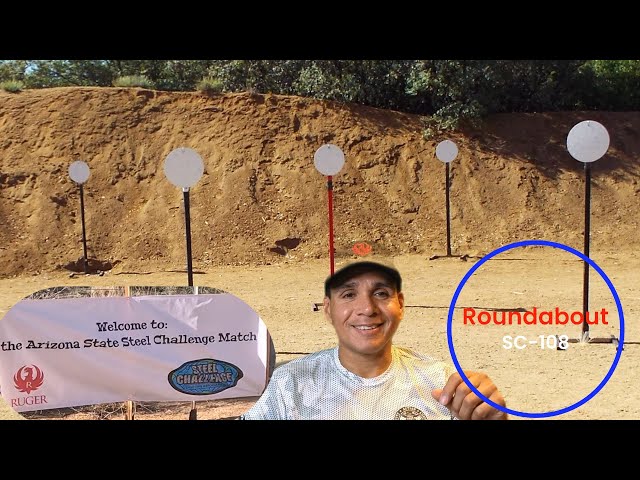
Sitting here and looking at the diagram for the life of me I can’t remember how I shot this one. I think I started with the left-hand close plate. I believe I applied the lesson learned from Accelerator and decided to shoot this one first in hopes of not whizzing back past it and prematurely shooting the stop plate. I’m fairly certain I shot the left side 15 yarder after that but don’t even vaguely recall the rest of my strategy here aside. Near? Far? Who knows?
The important thing is I closed out the last stage very well. Or at least good enough for me.
- 3.83
- 4.03
- 4.03
- 3.93
- 4.94 (I ripped through as quick as I could and then missed the Stop plate twice!)
There is a second day of competition today (Sunday) so final results are not in. I’m quite certain I will finish fairly far down the list but I don’t really care. There are a lot of shooters out there for whom these events are an obsession. They do this or similar events every week. I overheard conversations in the club house about plans to travel to Titusville, FL for the National Championships. As for me, I’ll be back at Pricetown or other local clubs in the future to give it another go. I may take a .22lr rifle next time or maybe I’ll even take a centerfire pistol and holster. I’m probably not spending hundreds or thousands of dollars on sport-specific belts, holsters, and guns to gain speed. There are some areas for improvement though and I will focus on those. I’ll probably just go and enjoy the satisfying sound of Bang! Clang!
Overall:
- Speed Option: 19.82
- Roundabout: 15.82
- Showdown: 17.74
- Pendulum: 23.26
- Accelerator: 27.05
- Smoke and Hope: 14.66
Final scores and results can be found on Practiscore.

 Bring it On
Loved the “Squint Westwood” clip. “Smoke and Hope” is pretty much how I got through college, but don’t tell the DEA. Overall, sounds like a worthwhile day for you. And congrats for trying a new challenge at your advanced age.
sounds like fun. I’ll have to try to join you a time or two.